System development isn’t just about coding—it’s about crafting intelligent, scalable solutions that transform how businesses operate. From healthcare to finance, robust systems drive efficiency, accuracy, and innovation. Let’s dive into the ultimate guide to mastering system development.


What Is System Development and Why It Matters

System development refers to the process of creating, designing, deploying, and maintaining software systems that meet specific user or business needs. It’s more than just writing code; it’s a structured journey involving planning, analysis, design, implementation, testing, and maintenance. In today’s digital-first world, effective system development powers everything from mobile apps to enterprise resource planning (ERP) systems.
The Core Definition of System Development
At its heart, system development is a lifecycle-driven process. It begins with identifying a problem or opportunity and ends with a fully functional, maintained system. According to the IEEE Computer Society, system development encompasses both technical and managerial activities aimed at delivering high-quality software solutions.
- It involves gathering requirements from stakeholders.
- It includes modeling system behavior and architecture.
- It ensures alignment between technology and business goals.
“Software is a great combination between artistry and engineering.” – Bill Gates
Historical Evolution of System Development
The concept of system development has evolved significantly since the mid-20th century. Early systems were built using machine code and assembly languages, requiring deep technical expertise. The 1960s introduced structured programming, while the 1980s brought object-oriented design into prominence.
With the rise of the internet in the 1990s, system development expanded to include web-based applications. Today, cloud computing, AI integration, and DevOps practices have redefined what it means to develop a system. The shift from waterfall to agile methodologies marks one of the most significant transformations in the field.
Impact on Modern Industries
System development plays a pivotal role across industries. In healthcare, electronic health record (EHR) systems streamline patient data management. In finance, algorithmic trading platforms rely on real-time data processing systems. Retailers use inventory management systems to optimize supply chains.
- Manufacturing uses automated control systems for production lines.
- Education leverages learning management systems (LMS) for remote teaching.
- Government agencies deploy citizen service portals built through system development.
The global demand for skilled system developers continues to grow, with the U.S. Bureau of Labor Statistics projecting a 25% increase in software developer jobs by 2031—much faster than average.
The System Development Life Cycle (SDLC) Explained
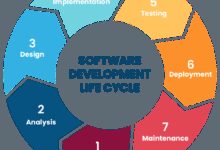
The System Development Life Cycle (SDLC) is a framework used to plan, design, develop, test, and deploy information systems. It provides a structured approach that ensures quality, efficiency, and alignment with user requirements. SDLC is foundational in any system development project, offering a roadmap from concept to completion.
Phases of the SDLC
SDLC typically consists of six core phases:
- Planning: Define project scope, objectives, and resources.
- Analysis: Gather and analyze user requirements.
- Design: Create system architecture and technical specifications.
- Implementation: Write code and build the system.
- Testing: Validate functionality and fix bugs.
- Maintenance: Provide updates and support post-deployment.
Each phase feeds into the next, ensuring a logical progression. Skipping or rushing phases can lead to costly errors and system failures.
Popular SDLC Models
Different projects require different approaches. Here are the most widely used SDLC models:
- Waterfall Model: A linear, sequential approach ideal for well-defined projects.
- Agile Model: Iterative and flexible, emphasizing collaboration and customer feedback.
- V-Model: An extension of waterfall with rigorous testing at each stage.
- Spiral Model: Combines iterative development with risk analysis.
- DevOps: Integrates development and operations for continuous delivery.
For example, NASA uses the V-model for mission-critical aerospace systems due to its emphasis on verification. Meanwhile, startups often prefer Agile for its adaptability.
Choosing the Right SDLC Model
Selecting the appropriate model depends on several factors:
- Project size and complexity
- Stakeholder involvement
- Regulatory requirements
- Time-to-market constraints
- Team expertise
For instance, a fintech company developing a mobile banking app might choose Agile to respond quickly to market changes. Conversely, a defense contractor building a secure communication system may opt for the Waterfall model to ensure strict compliance.
Key Methodologies in System Development
Methodologies shape how teams approach system development. They define workflows, roles, deliverables, and communication patterns. Choosing the right methodology can make or break a project’s success.
Waterfall: The Traditional Approach
The Waterfall model is one of the earliest and most structured approaches to system development. Each phase must be completed before moving to the next, making it highly predictable but inflexible.
- Best suited for projects with stable, well-understood requirements.
- Commonly used in government and defense sectors.
- Documentation-heavy, which aids compliance and audits.
However, its rigidity makes it unsuitable for dynamic environments where user needs evolve rapidly.
Agile: The Modern Standard
Agile has become the gold standard in system development, especially for software products. It emphasizes iterative development, customer collaboration, and responsiveness to change.
- Work is divided into sprints, typically lasting 2–4 weeks.
- Daily stand-up meetings keep teams aligned.
- Customer feedback is integrated continuously.
According to the State of Agile Report, over 90% of organizations practice Agile in some form. Companies like Spotify and Amazon use scaled Agile frameworks to manage large, distributed teams.
“Individuals and interactions over processes and tools.” – Agile Manifesto
DevOps: Bridging Development and Operations
DevOps is not just a methodology—it’s a cultural shift. It integrates development (Dev) and operations (Ops) to enable faster, more reliable software releases.
- Automates testing, deployment, and monitoring.
- Uses tools like Jenkins, Docker, and Kubernetes.
- Enables continuous integration and continuous delivery (CI/CD).
Netflix, for example, deploys thousands of code changes daily using DevOps practices. This agility allows them to innovate rapidly while maintaining system stability.
Essential Tools and Technologies in System Development
No system development effort succeeds without the right tools. From integrated development environments (IDEs) to version control systems, modern developers rely on a robust tech stack to build, test, and deploy software efficiently.
Integrated Development Environments (IDEs)
An IDE is a software suite that consolidates coding, debugging, and testing tools into a single interface. Popular IDEs include:
- Visual Studio Code: Lightweight, extensible, and free—ideal for web and cloud development.
- IntelliJ IDEA: Preferred for Java-based enterprise applications.
- Eclipse: Open-source platform widely used in academic and industrial settings.
These tools boost productivity by offering syntax highlighting, auto-completion, and real-time error detection.
Version Control Systems
Version control is critical in system development for tracking changes, collaborating across teams, and maintaining code integrity. Git is the most widely used system today.
- Platforms like GitHub, GitLab, and Bitbucket host repositories.
- Branching and merging allow parallel development.
- Enables code reviews and audit trails.
According to GitHub’s Octoverse Report, there are over 100 million developers using Git worldwide. This widespread adoption underscores its importance in modern system development.
Testing and Debugging Tools
Ensuring software quality requires robust testing. Tools vary by testing type:
- Unit Testing: JUnit (Java), pytest (Python)
- Integration Testing: Postman, SoapUI
- Performance Testing: JMeter, LoadRunner
- Automated UI Testing: Selenium, Cypress
Debugging tools like Chrome DevTools or Visual Studio Debugger help identify and fix issues in real time, reducing development cycles.
Role of Requirements Engineering in System Development
Requirements engineering is the foundation of successful system development. It involves identifying, documenting, and managing the needs and constraints of stakeholders. Poorly defined requirements are a leading cause of project failure.
Gathering User Requirements
Effective requirement gathering starts with stakeholder interviews, surveys, and workshops. Techniques include:
- Use Case Modeling: Describes interactions between users and the system.
- User Stories: Short, simple descriptions of features from the user’s perspective.
- Prototyping: Building mockups to visualize functionality early.
For example, when developing a hospital management system, input from doctors, nurses, and administrators ensures the final product meets real-world needs.
Documenting Functional and Non-Functional Requirements
Requirements are categorized into two main types:
- Functional Requirements: Define what the system should do (e.g., “The system shall allow users to reset passwords”).
- Non-Functional Requirements: Specify how the system should perform (e.g., “The system must handle 10,000 concurrent users with a response time under 2 seconds”).
Non-functional requirements cover performance, security, scalability, and usability—critical aspects often overlooked in early stages.
Managing Requirement Changes
In dynamic environments, requirements evolve. Change management processes ensure modifications are evaluated, approved, and implemented without derailing the project.
- Use a Change Request Form (CRF) to document proposed changes.
- Conduct impact analysis to assess cost, timeline, and risk.
- Maintain a requirements traceability matrix (RTM) to track changes.
Agile frameworks handle changes more fluidly through backlog grooming and sprint planning, allowing teams to adapt without formal change control overhead.
Design Principles for Scalable and Secure Systems
System development isn’t complete without thoughtful design. A well-architected system is scalable, maintainable, and secure. Design decisions made early in the process have long-term implications.
Modularity and Separation of Concerns
Modular design breaks a system into independent components. Each module handles a specific function, making the system easier to develop, test, and maintain.
- Follows the Single Responsibility Principle (SRP).
- Enables parallel development by different teams.
- Facilitates reuse across projects.
For instance, microservices architecture applies modularity at the service level, allowing teams to deploy and scale services independently.
Security by Design
Security should not be an afterthought. Integrating security into the system development lifecycle reduces vulnerabilities and compliance risks.
- Implement authentication and authorization mechanisms (e.g., OAuth, JWT).
- Encrypt sensitive data at rest and in transit.
- Conduct threat modeling during the design phase.
- Perform regular security audits and penetration testing.
The OWASP Top Ten project provides a comprehensive guide to common web application security risks, helping developers build safer systems.
Scalability and Performance Optimization
A system must perform well under increasing load. Scalability can be achieved through:
- Horizontal Scaling: Adding more servers (e.g., using cloud auto-scaling).
- Vertical Scaling: Upgrading server resources (CPU, RAM).
- Caching: Using Redis or Memcached to reduce database load.
- Database Indexing: Speeding up query responses.
Companies like Airbnb and Uber rely on scalable architectures to handle millions of users daily.
Testing, Deployment, and Maintenance in System Development
Even the best-designed system can fail without proper testing, deployment, and maintenance. These final stages ensure reliability, user satisfaction, and long-term success.
Comprehensive Testing Strategies
Testing is not a single activity but a multi-layered process:
- Unit Testing: Validates individual components.
- Integration Testing: Ensures modules work together.
- System Testing: Tests the complete system against requirements.
- User Acceptance Testing (UAT): Confirms the system meets user needs.
Automated testing frameworks reduce human error and accelerate release cycles. Test-driven development (TDD), where tests are written before code, ensures higher code quality.
Deployment Best Practices
Deployment is the process of releasing the system into production. Best practices include:
- Using CI/CD pipelines for automated builds and deployments.
- Implementing blue-green or canary deployments to minimize downtime.
- Rolling back quickly if issues arise.
Tools like Ansible, Terraform, and Kubernetes streamline deployment across environments, from development to production.
Ongoing Maintenance and Support
Once deployed, a system requires continuous maintenance. This includes:
- Fixing bugs and performance issues.
- Applying security patches.
- Adding new features based on user feedback.
- Monitoring system health with tools like Prometheus or New Relic.
Proactive maintenance prevents system degradation and extends the software’s lifespan. Studies show that up to 70% of software development effort occurs post-deployment.
Future Trends Shaping System Development
The field of system development is rapidly evolving. Emerging technologies and methodologies are redefining how systems are built, deployed, and maintained.
Artificial Intelligence and Machine Learning Integration
AI and ML are no longer futuristic concepts—they’re integral to modern system development. Developers now embed intelligent features like:
- Predictive analytics in CRM systems.
- Natural language processing in chatbots.
- Automated anomaly detection in cybersecurity.
Platforms like TensorFlow and PyTorch enable developers to integrate ML models directly into applications, enhancing functionality and user experience.
Low-Code and No-Code Platforms
Low-code and no-code platforms are democratizing system development. Tools like Microsoft Power Apps, OutSystems, and Bubble allow non-developers to build functional applications using drag-and-drop interfaces.
- Reduce development time from months to days.
- Empower business analysts and domain experts to create solutions.
- Complement traditional development rather than replace it.
Gartner predicts that by 2025, 70% of new applications developed by enterprises will use low-code or no-code technologies.
Cloud-Native Development and Serverless Architectures
Cloud-native development leverages cloud computing from the ground up. It emphasizes containerization, microservices, and dynamic orchestration.
- Serverless computing (e.g., AWS Lambda) allows developers to run code without managing servers.
- Reduces infrastructure costs and improves scalability.
- Enables faster time-to-market.
Companies like Slack and Zoom were built using cloud-native principles, enabling rapid scaling during periods of high demand.
What is system development?
System development is the process of creating software systems through a structured lifecycle that includes planning, analysis, design, implementation, testing, and maintenance. It aims to deliver reliable, efficient, and user-centered solutions.
What are the main phases of SDLC?
The main phases of the System Development Life Cycle (SDLC) are Planning, Analysis, Design, Implementation, Testing, and Maintenance. Each phase ensures the system meets user requirements and functions correctly.
Which methodology is best for system development?
The best methodology depends on the project. Agile is ideal for dynamic, user-focused projects. Waterfall suits stable, well-defined systems. DevOps excels in continuous delivery environments.
How important is testing in system development?
Testing is critical. It ensures the system is free of bugs, performs well under load, and meets user expectations. Comprehensive testing reduces post-deployment issues and enhances reliability.
What are emerging trends in system development?
Key trends include AI/ML integration, low-code/no-code platforms, cloud-native development, and serverless architectures. These innovations are making system development faster, smarter, and more accessible.
System development is a dynamic and essential discipline that powers the digital world. From defining requirements to deploying intelligent systems, every step matters. By understanding the SDLC, choosing the right methodologies, leveraging modern tools, and embracing future trends, organizations can build robust, scalable, and secure systems. Whether you’re a developer, manager, or stakeholder, mastering system development is key to innovation and long-term success.
Further Reading: