Ever wondered how complex software systems come to life? It all starts with a proven roadmap called the system development life cycle. This structured approach guides teams from idea to deployment—and beyond—with precision, efficiency, and control.


What Is the System Development Life Cycle?

The system development life cycle (SDLC) is a comprehensive framework used to design, develop, test, and deploy information systems efficiently. It provides a structured process that ensures quality, reduces risks, and aligns technical efforts with business goals. Originally developed for large-scale software projects, SDLC has evolved into a cornerstone methodology across IT, engineering, and digital transformation initiatives.
At its core, the system development life cycle breaks down the creation of a software system into distinct, manageable phases. Each phase has specific goals, deliverables, and checkpoints, allowing teams to track progress, manage resources, and maintain accountability. Whether building a mobile app, an enterprise resource planning (ERP) system, or a cloud-based platform, following SDLC principles increases the likelihood of project success.
Core Purpose of SDLC
The primary purpose of the system development life cycle is to produce high-quality systems that meet or exceed user expectations, are delivered on time, and stay within budget. By defining clear stages and responsibilities, SDLC minimizes ambiguity and prevents costly rework. It also facilitates communication between stakeholders—developers, project managers, clients, and end-users—ensuring everyone is aligned throughout the project lifecycle.
According to the ISACA, a global professional association focused on IT governance, organizations that adopt formal SDLC models report up to 40% fewer project failures due to improved planning and risk management.
Key Benefits of Using SDLCImproved Project Management: Clear milestones and deliverables make it easier to plan, schedule, and monitor progress.Higher Quality Output: Structured testing and review processes help identify and fix defects early.Cost Efficiency: Early detection of issues reduces expensive fixes in later stages.Risk Mitigation: Proactive identification of technical, operational, and financial risks.Stakeholder Alignment: Regular feedback loops ensure the final product meets user needs.”The system development life cycle isn’t just about coding—it’s about creating value through disciplined engineering and strategic planning.” — Dr.Linda Rising, Software Engineering ConsultantPhase 1: Planning in the System Development Life CycleThe first phase of the system development life cycle is planning—the foundation upon which the entire project rests.During this stage, project leaders define the scope, objectives, and feasibility of the proposed system..
It’s where big-picture questions are answered: What problem are we solving?Who are the users?What resources do we need?.
Effective planning involves gathering input from stakeholders, conducting preliminary research, and assessing technical and economic viability. This phase often results in a Project Initiation Document (PID) or a Feasibility Study Report, both of which serve as official approval to move forward.
Feasibility Analysis
Before investing time and money, organizations must determine whether the proposed system is feasible. This involves evaluating five key dimensions:
- Technical Feasibility: Can the organization build the system with current technology and expertise?
- Economic Feasibility: Will the benefits outweigh the costs? A cost-benefit analysis is typically conducted here.
- Operational Feasibility: Will the system be used effectively once deployed?
- Schedule Feasibility: Can the project be completed within the desired timeframe?
- Legal Feasibility: Are there any regulatory or compliance issues (e.g., GDPR, HIPAA)?
For example, a healthcare startup planning an electronic medical records (EMR) system must ensure HIPAA compliance before proceeding—a critical legal feasibility check.
Resource and Risk Assessment
Once feasibility is confirmed, the next step is identifying the resources required: personnel, hardware, software, and budget. A resource plan outlines roles (e.g., project manager, developers, QA testers) and timelines.
Risk assessment is equally important. Common risks include scope creep, technology obsolescence, and team turnover. The Project Management Institute (PMI) recommends using a Risk Register to document potential threats and mitigation strategies early in the system development life cycle.
Phase 2: Requirements Gathering and Analysis
This phase marks the transition from concept to concrete specifications. The goal of requirements gathering is to understand exactly what the system must do to satisfy user needs. Misunderstandings at this stage are one of the leading causes of project failure, making thorough analysis essential.
Business analysts, system architects, and stakeholders collaborate to collect functional and non-functional requirements. Functional requirements describe what the system should do (e.g., ‘users can reset their password’), while non-functional requirements define how the system should perform (e.g., ‘the system must respond to login requests within 2 seconds’).
Techniques for Effective Requirements Gathering
Several proven techniques help teams extract accurate and complete requirements:
- Interviews: One-on-one or group discussions with key stakeholders.
- Surveys and Questionnaires: Useful for collecting input from a large user base.
- Workshops (JAD Sessions): Joint Application Development sessions bring users and developers together for rapid consensus.
- Observation: Watching users interact with existing systems to identify pain points.
- Document Analysis: Reviewing current business processes, policies, and system documentation.
A well-documented Software Requirements Specification (SRS) document is typically produced at the end of this phase. The IEEE provides a standard template (IEEE 830) for writing SRS documents, ensuring consistency and completeness.
Challenges in Requirements Analysis
Despite best efforts, challenges persist. Users may not know what they want until they see a prototype, or their needs may evolve during development. Ambiguous or conflicting requirements can lead to delays and rework.
To combat this, agile methodologies incorporate iterative feedback, allowing requirements to be refined over time. However, even in agile environments, a baseline set of requirements is crucial for setting direction.
“The most dangerous phrase in software development is: ‘That’s what the user asked for.'” — Kent Beck, Agile Manifesto Co-Author
Phase 3: System Design in the System Development Life Cycle
With requirements in hand, the next phase of the system development life cycle is design—where the blueprint of the system is created. This phase translates user needs into technical specifications that developers can implement.
System design is typically divided into two levels: high-level (architectural) design and low-level (detailed) design. The output includes diagrams, data models, interface mockups, and technology stack recommendations.
Architectural Design
Also known as high-level design, this stage defines the overall system architecture. Key decisions include:
- Choosing between monolithic, microservices, or serverless architectures.
- Defining system components and their interactions (e.g., APIs, databases, front-end, back-end).
- Selecting integration patterns (e.g., REST, GraphQL, message queues).
- Planning for scalability, security, and fault tolerance.
Architectural diagrams, such as UML (Unified Modeling Language) or C4 models, are used to visualize the structure. For instance, a banking application might use a three-tier architecture: presentation layer (web/mobile), business logic layer (application server), and data layer (database).
Detailed Design and Prototyping
Low-level design dives into the specifics of each module. This includes:
- Database schema design (tables, relationships, indexes).
- Class diagrams and method signatures in object-oriented systems.
- User interface wireframes and interaction flows.
- Error handling and logging mechanisms.
Prototyping is often used at this stage to validate design assumptions. A clickable prototype allows stakeholders to experience the system before coding begins, reducing the risk of costly changes later.
Tools like Figma, Sketch, or Adobe XD are commonly used for UI/UX prototyping, while ERD (Entity Relationship Diagram) tools like Lucidchart help design databases.
Phase 4: Implementation (Coding) in the System Development Life Cycle
Implementation, also known as the coding phase, is where the actual software is built. Developers write code based on the design specifications, turning abstract models into functional programs. This is often the most visible and time-consuming phase of the system development life cycle.
While coding may seem straightforward, it requires strict adherence to coding standards, version control practices, and collaboration protocols. The quality of implementation directly impacts system performance, maintainability, and security.
Choosing the Right Technology Stack
The choice of programming languages, frameworks, and tools depends on the system’s requirements. For example:
- Web Applications: JavaScript (React, Angular), Python (Django), Ruby (Rails).
- Mobile Apps: Swift (iOS), Kotlin (Android), or cross-platform tools like Flutter.
- Backend Services: Node.js, Java (Spring), .NET.
- Databases: PostgreSQL, MySQL, MongoDB, or cloud solutions like AWS RDS or Firestore.
Modern development environments often use containerization (Docker) and orchestration (Kubernetes) to ensure consistency across development, testing, and production environments.
Code Quality and Best Practices
To ensure clean, maintainable code, teams follow best practices such as:
- Version Control: Using Git (via GitHub, GitLab, or Bitbucket) to track changes and enable collaboration.
- Code Reviews: Peer reviews to catch bugs and enforce standards.
- Modular Design: Breaking code into reusable components or microservices.
- Documentation: Inline comments and external documentation for future maintenance.
The OWASP Top 10 guidelines are critical for secure coding, helping developers avoid common vulnerabilities like SQL injection and cross-site scripting (XSS).
system development life cycle – System development life cycle menjadi aspek penting yang dibahas di sini.
Phase 5: Testing in the System Development Life Cycle
No system is ready for deployment without rigorous testing. This phase of the system development life cycle ensures that the software functions as intended, meets requirements, and is free of critical defects.
Testing is not a single event but a series of activities performed throughout the development process. From unit tests written by developers to user acceptance testing (UAT) conducted by end-users, each level plays a vital role in quality assurance.
Types of Testing in SDLC
Different types of testing target various aspects of the system:
- Unit Testing: Tests individual components or functions (e.g., using JUnit for Java).
- Integration Testing: Verifies that modules work together as expected.
- System Testing: Evaluates the complete system against requirements.
- Performance Testing: Checks speed, scalability, and stability under load.
- Security Testing: Identifies vulnerabilities using tools like Burp Suite or Nessus.
- User Acceptance Testing (UAT): Final validation by real users in a production-like environment.
Automated testing frameworks like Selenium, Cypress, or Jest help streamline repetitive tests, improving coverage and reducing human error.
Test-Driven Development (TDD)
An advanced approach gaining popularity is Test-Driven Development (TDD), where tests are written before the actual code. The cycle follows three steps: Red (write a failing test), Green (write code to pass the test), Refactor (improve code without changing behavior).
TDD promotes cleaner code, better design, and higher confidence in changes. Companies like Google and Amazon use TDD extensively in their development pipelines.
“Testing shows the presence, not the absence of bugs.” — Edsger W. Dijkstra, Computer Science Pioneer
Phase 6: Deployment and Implementation
After successful testing, the system moves to deployment—the phase where it becomes available to users. Deployment strategies vary depending on the system’s complexity, user base, and risk tolerance.
This phase is not just about launching software; it includes data migration, user training, system configuration, and go-live support. A poorly executed deployment can undermine months of work, so careful planning is essential.
Deployment Strategies
Common deployment models include:
- Big Bang Deployment: The entire system is released at once. High risk but fast.
- Phased Deployment: Roll out features incrementally to manage risk.
- Parallel Deployment: Old and new systems run simultaneously until the new one is proven.
- Canary Release: Release to a small subset of users first, then gradually expand.
- Blue-Green Deployment: Maintain two identical environments; switch traffic from ‘blue’ (old) to ‘green’ (new) after testing.
DevOps practices and CI/CD (Continuous Integration/Continuous Deployment) pipelines automate much of this process, enabling faster, more reliable releases.
Post-Deployment Activities
Deployment doesn’t end with launch. Key post-deployment tasks include:
- Monitoring system performance and error logs.
- Providing user support and troubleshooting issues.
- Collecting user feedback for future improvements.
- Conducting a post-mortem review to document lessons learned.
Tools like Prometheus, Grafana, and Splunk help monitor system health in real time, ensuring quick response to outages or performance degradation.
Phase 7: Maintenance and Evolution
The final phase of the system development life cycle is maintenance—often the longest and most costly. Once a system is live, it must be maintained to fix bugs, improve performance, adapt to changing requirements, and integrate with new technologies.
Maintenance is not a sign of failure but a natural part of a system’s lifecycle. According to IBM, up to 75% of software development costs occur after initial deployment, primarily in maintenance.
Types of Maintenance
Maintenance activities fall into four categories:
- Corrective Maintenance: Fixing bugs and errors discovered after deployment.
- Adaptive Maintenance: Modifying the system to work in new environments (e.g., upgrading to a new OS).
- Perfective Maintenance: Enhancing features or performance based on user feedback.
- Preventive Maintenance: Updating code to prevent future issues (e.g., patching security vulnerabilities).
Effective maintenance requires a dedicated support team, version control, and a change management process to track updates.
System Retirement and Replacement
Eventually, every system reaches the end of its lifecycle. Legacy systems may become too costly to maintain or incompatible with modern infrastructure. At this point, organizations must decide whether to retire, replace, or refactor the system.
A well-documented system development life cycle makes this transition smoother by providing clear records of architecture, dependencies, and usage patterns.
What is the system development life cycle?
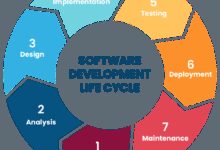
The system development life cycle (SDLC) is a structured process for planning, creating, testing, and deploying information systems. It consists of several phases—planning, analysis, design, implementation, testing, deployment, and maintenance—each designed to ensure the delivery of high-quality, reliable software.
What are the main SDLC models?
Common SDLC models include the Waterfall model (sequential), Agile (iterative), Spiral (risk-driven), V-Model (testing-focused), and DevOps (continuous delivery). Each model suits different project types and organizational needs.
Why is SDLC important in software development?
SDLC provides a disciplined framework that improves project predictability, reduces risks, enhances quality, and ensures stakeholder alignment. It helps teams deliver systems on time, within budget, and according to user requirements.
How does Agile fit into the system development life cycle?
Agile reinterprets the traditional SDLC by breaking it into short iterations (sprints). Each sprint includes planning, development, testing, and review, allowing for continuous feedback and adaptation. While Agile is flexible, it still follows the core principles of the system development life cycle.
Can SDLC be used for non-software projects?
Yes, the principles of SDLC can be applied to any complex system development project, including hardware systems, network infrastructure, and business process redesign. The structured approach to planning, execution, and review is universally valuable.
In conclusion, the system development life cycle is far more than a technical checklist—it’s a strategic framework that bridges business needs with technological execution. From initial planning to long-term maintenance, each phase plays a critical role in delivering systems that are functional, secure, and sustainable. Whether you follow a traditional Waterfall model or a modern DevOps pipeline, understanding and applying SDLC principles dramatically increases the odds of project success. As technology continues to evolve, so too will the methods we use to build it—but the core discipline of the system development life cycle remains timeless.
system development life cycle – System development life cycle menjadi aspek penting yang dibahas di sini.
Further Reading: